
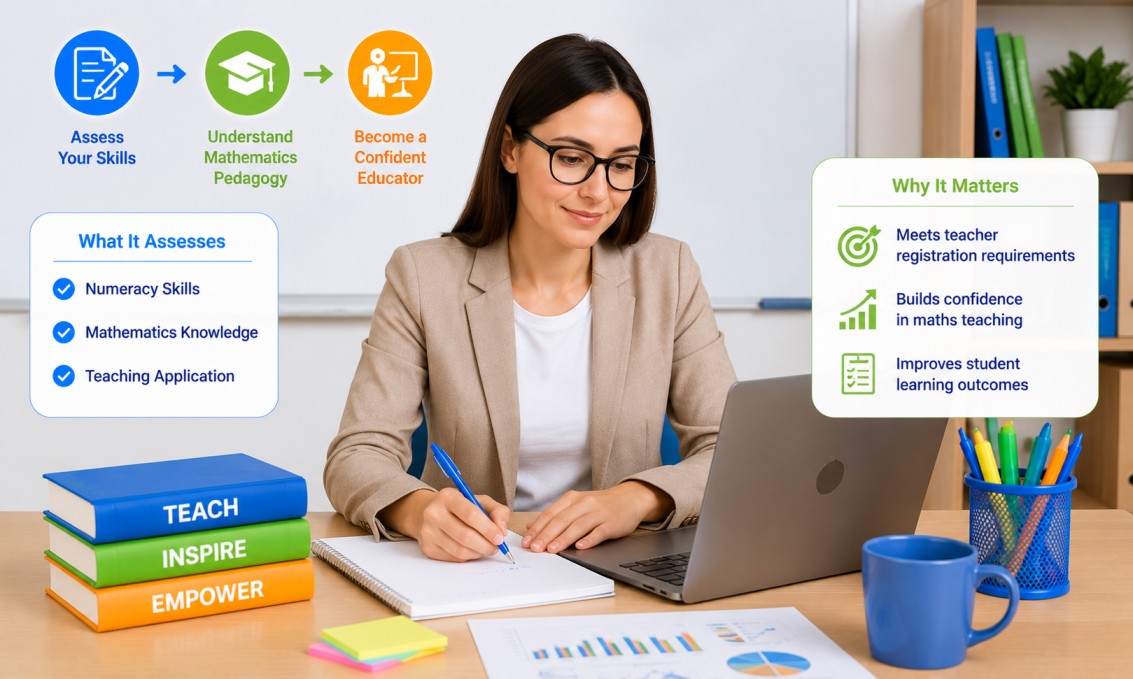
The LANTITE test, short for the Literacy and Numeracy Test for Initial Teacher Education, is a compulsory online assessment every aspiring teacher in Australia must pass before they can graduate. Administered by the Australian Council for Educational Research, it checks whether trainee teachers have personal literacy and numeracy skills within the top 30 percent of the Australian adult population, the same standard they will one day be expected to model in the classroom. For education students, understanding what LANTITE actually tests, how it is structured, and how to prepare properly can be the difference between a stressful resit and a confident pass on the first attempt.
What Is the LANTITE Test?
LANTITE stands for the Literacy and Numeracy Test for Initial Teacher Education. It was introduced in 2016 to give the Australian public confidence that every graduating teacher has strong personal literacy and numeracy skills, separate from the subject knowledge they gain through their degree.
The test is not about how well someone can teach maths or English. It measures a candidate’s own reading, writing, and number skills using everyday, school relevant scenarios, such as interpreting a student report, checking a budget for classroom resources, or editing a letter to parents.
Every student enrolled in an accredited initial teacher education course in Australia must attempt LANTITE, usually before the end of their first year of study, and must meet the required standard before they can graduate or begin their final professional placement.
Why Is LANTITE Important for Teachers?
LANTITE exists because literacy and numeracy are the foundation of good teaching, no matter what subject or year level a graduate ends up teaching.
- It gives schools and parents confidence that every new teacher has strong personal literacy and numeracy skills, not just subject knowledge.
- It supports the quality of instruction students receive, since teachers who model strong literacy and numeracy tend to build these same skills in their students.
- It is a mandatory requirement for graduation and teacher registration in every Australian state and territory, so it cannot be skipped or waived.
- It gives future teachers an honest, early check on their own skills, with time to strengthen any weak areas well before they are managing a classroom.
What Does the LANTITE Test Cover?
LANTITE has two separate components, Literacy and Numeracy. Each is computer based, includes 65 questions, and can be sat together or on separate days.
Literacy Component
Around two-thirds of the literacy questions focus on reading comprehension, using texts a teacher might realistically encounter, such as school newsletters, policy documents, or student work samples. The remaining questions test technical writing skills, including spelling, grammar, punctuation, and sentence structure.
Numeracy Component
The numeracy test is split into two sections. The first allows an on-screen calculator and covers the majority of questions. The second is a shorter, non-calculator section testing mental maths and estimation. Once a candidate moves into the non-calculator section, they cannot return to the calculator section, so pacing is important.
Numeracy questions are drawn from realistic teaching contexts, such as calculating a class average, reading a timetable, or interpreting a simple graph of student results.
| Quick fact Both LANTITE components can be resat as many times as needed, with no limit on attempts. There are four test windows offered each year, so candidates have regular opportunities to try again if they do not meet the standard the first time. |
How to Prepare for LANTITE
Most candidates already have the underlying skills LANTITE requires. Preparation is mostly about becoming familiar with the format and sharpening a few specific areas.
Practise with official style questions
Using practice materials that mirror the real test format helps candidates get comfortable with the timing, the multiple choice and short answer mix, and the on screen calculator tool before test day.
Brush up on mental maths
Since the non calculator section cannot be revisited once started, practising quick mental calculations, rounding, and estimation builds the speed and confidence needed for that section specifically.
Review core grammar and punctuation rules
A quick refresh of common grammar, spelling, and punctuation rules goes a long way in the technical writing questions, which are often where otherwise strong candidates lose marks.
Read a wide range of school related texts
Reading newsletters, reports, and policy style documents builds familiarity with the tone and structure of the texts used in the literacy component.
Get targeted support for weak areas
If a candidate has struggled with a particular skill, such as fractions or comprehension of dense text, focused one on one support can close that gap far faster than general revision.
Conclusion
The LANTITE test plays a genuine role in maintaining the quality of Australian teaching, ensuring every graduate enters the classroom with strong personal literacy and numeracy skills to match their subject expertise. While it can feel like an extra hurdle during a busy teaching degree, most candidates pass comfortably with a little focused LANTITE test preparation. Understanding the test format, practising the specific skills each section covers, and addressing any weak spots early are the most reliable ways to walk in feeling ready and walk out with a pass.
Frequently Asked Questions
LANTITE stands for the Literacy and Numeracy Test for Initial Teacher Education, a mandatory test for all Australian teaching students.
Every student enrolled in an accredited initial teacher education course in Australia must sit and pass LANTITE before graduating.
There is no limit on the number of attempts. Candidates can resit either component as many times as needed across the four annual test windows.
Yes, for most of the numeracy test. A shorter section near the end does not allow a calculator, and candidates cannot return to the calculator section once they move on.
Most candidates pass on their first or second attempt. The test reflects realistic, school based literacy and numeracy tasks rather than advanced or obscure content.